


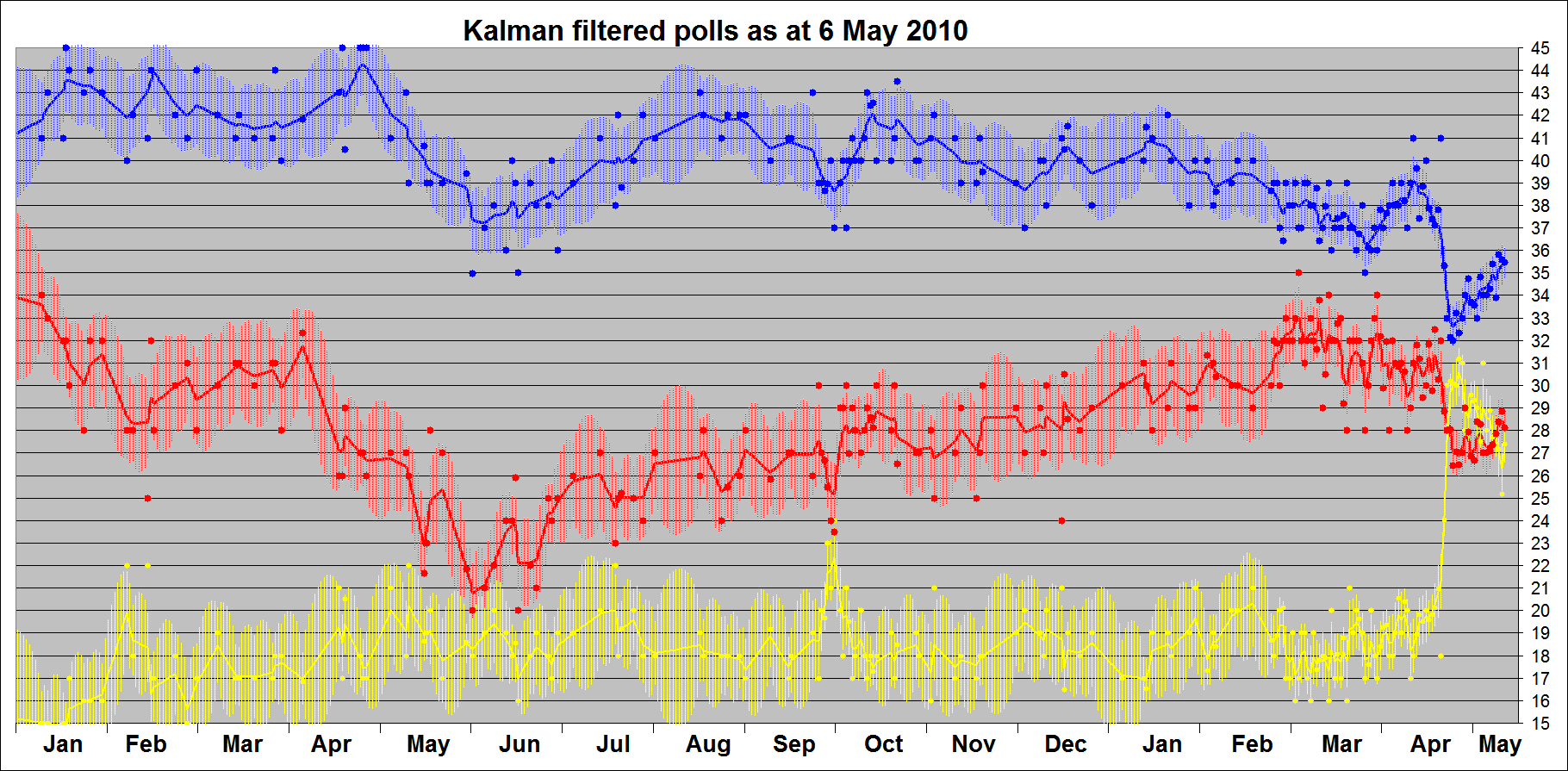
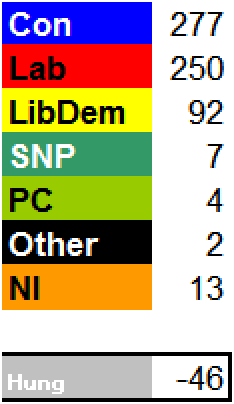

The Channel 4 report touched on two points that were mentioned in an article I wrote for PoliticalBetting Channel 2 in April 2009. Here it is reproduced in full, updated slightly to take account of the latest data.
Discussions of the prospect of a hung parliament have probably caused more disagreements here than any other topic. The preponderance of opinion seems to be that the Tories are very likely to win a majority. All things are possible, but before one commits to a position an objective analysis is called for.
What is the Electoral System saying?
The capacity of FPTP to deliver an overall majority is entirely dependent on two factors – its exaggeration when translating votes into seats, and the number of third party MPs.
The first has been in long-term decline since the demise of the “cube-law” in the 1950s, although it has recovered slightly since 1992, and has now stabilised at around a “square-law.” This change, due to the decline in the number of marginals, means that fewer seats now change hands between Labour and Conservative for a given shift in votes, or swing.
The second has seen the number of MPs not aligned with Labour or Conservative grow from just 8 in 1955 to no fewer than 92 in 2005. This change, due to the rise in the LibDems and Nationalists, and the de-coupling of Northern Ireland from the mainland party system, means that to gain an overall majority Labour or Conservative now need a far larger lead in seats over each other than they did in the past.
Combined, these two factors have dramatically altered the British FPTP system from one where hung parliaments were extremely unlikely to one where they are now increasingly likely.


![[LibDems]](http://www.titanictown.plus.com/hp/LibDem.png)
![[Lead]](http://www.titanictown.plus.com/hp/lead.png)